Switching energy supplier in Belgium is free, causes no interruption and takes about ten minutes. Yet a large share of Belgian households has never switched since signing their very first contract — and pays a few hundred euros too much every year as a result. It is not laziness: the procedure has a reputation for being complicated, when it stopped being so long ago. Here is exactly what happens, step by step, and the two or three points where attention pays off.
Why do so few Belgians switch supplier?
Because the market rewards inertia. A contract signed five years ago almost never kept its day-one conditions: through tacit renewals, the supplier moves the customer onto its current price list, generally less attractive than its acquisition offers. Nothing illegal — it is all in the general terms — but the result is a gap that widens silently, year after year.
Two beliefs keep people stuck. The first: "I might lose supply." That is false, and we will see why. The second: "it will take time." In practice, signing up online with a new supplier takes about ten minutes, and the supplier itself carries out every subsequent step.
What actually happens when you switch?
Four steps, only one of which really requires you to think.
- Gather two pieces of information. Your last annual invoice (to know your real consumption in kWh, gas and electricity) and your EAN code, the 18-digit number starting with 54 that identifies your connection point. It appears on your invoice. Nothing can be done without it.
- Compare offers using YOUR consumption. This is the decisive step, and the only one that takes some thought. Never compare isolated per-kWh prices: add the fixed annual standing charge and think in euros per year. Our ranking of energy suppliers details the real gaps between Mega, Bolt, Engie, Eneco, Luminus, TotalEnergies and OCTA+ for a reference household.
- Sign up with the new supplier. Online, with your EAN code and bank details. From that point on, you have nothing left to do.
- Let the new supplier work. It notifies the grid operator, cancels your old contract and sets the switching date. Expect three weeks to a month, the length of the notice period.
The key figures of the operation fit in a few lines.
| Item | What applies |
|---|---|
| Cost of switching | €0 |
| Maximum notice period | 1 month |
| Length of the switch | 3 weeks to 1 month |
| Online sign-up | about 10 minutes |
| Supply interruption | none |
| Observed annual saving | €150 to €650 |
| Documents needed | last annual invoice and EAN code |
Should you cancel your old contract yourself?
No — and this is the most common mistake. Cancellation is part of the transfer and is carried out by the new supplier. If you cancel separately on your side, you risk either a coverage gap (you land temporarily with the supplier of last resort, at a markedly worse tariff) or double billing that you then have to untangle.
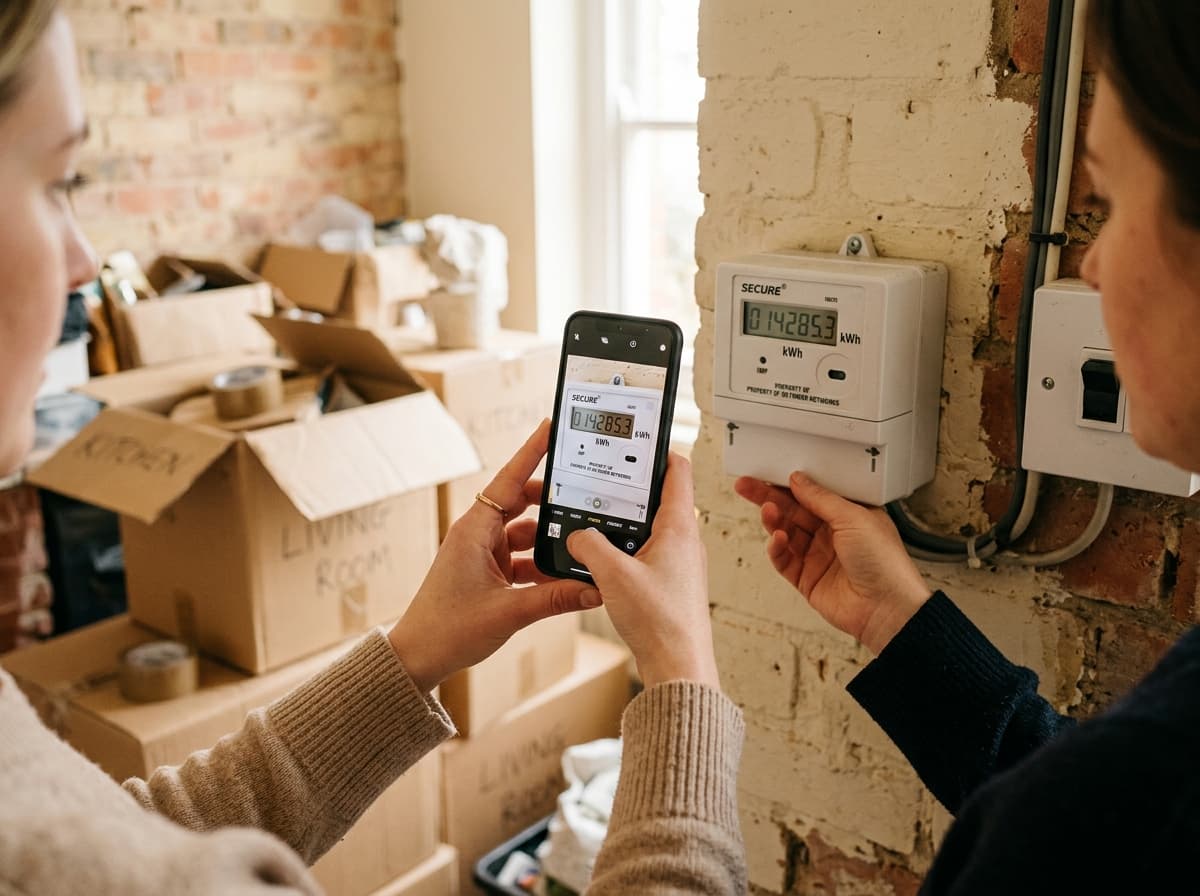
The only situation where you must act yourself is a move: there, you close your contract at the old address, with an agreed meter reading, and open one at the new address. These are two operations distinct from a simple supplier switch, even if they often come together — we set them out in our guide to moving home and energy in Belgium.
What notice period applies to my contract?
One month at most, whatever the contract type. Since the 2023 reforms, fixed contracts for Belgian households can also be cancelled with a one-month notice and no exit fee — a point many consumers still do not know, and which blocked switching during the energy crisis.
The full legal framework, and the rare cases where fees can still be claimed, are set out in our article on energy contract termination fees.
Will my supply be cut off during the switch?
No, never. This is the most persistent misunderstanding on the energy market, and it rests on a confusion between two roles.
The supplier sells you the energy and bills you. The distribution grid operator — Ores, Resa, Fluvius or Sibelga depending on your municipality — owns the cables, the pipes and the meter, and physically delivers the energy to your home. When you switch supplier, the grid operator does not change: it simply updates, in its database, the supplier name linked to your EAN code. No physical work, no technician, no interruption.
What should you check on the switching day?
Your meter reading. It is the only place where carelessness genuinely costs money.
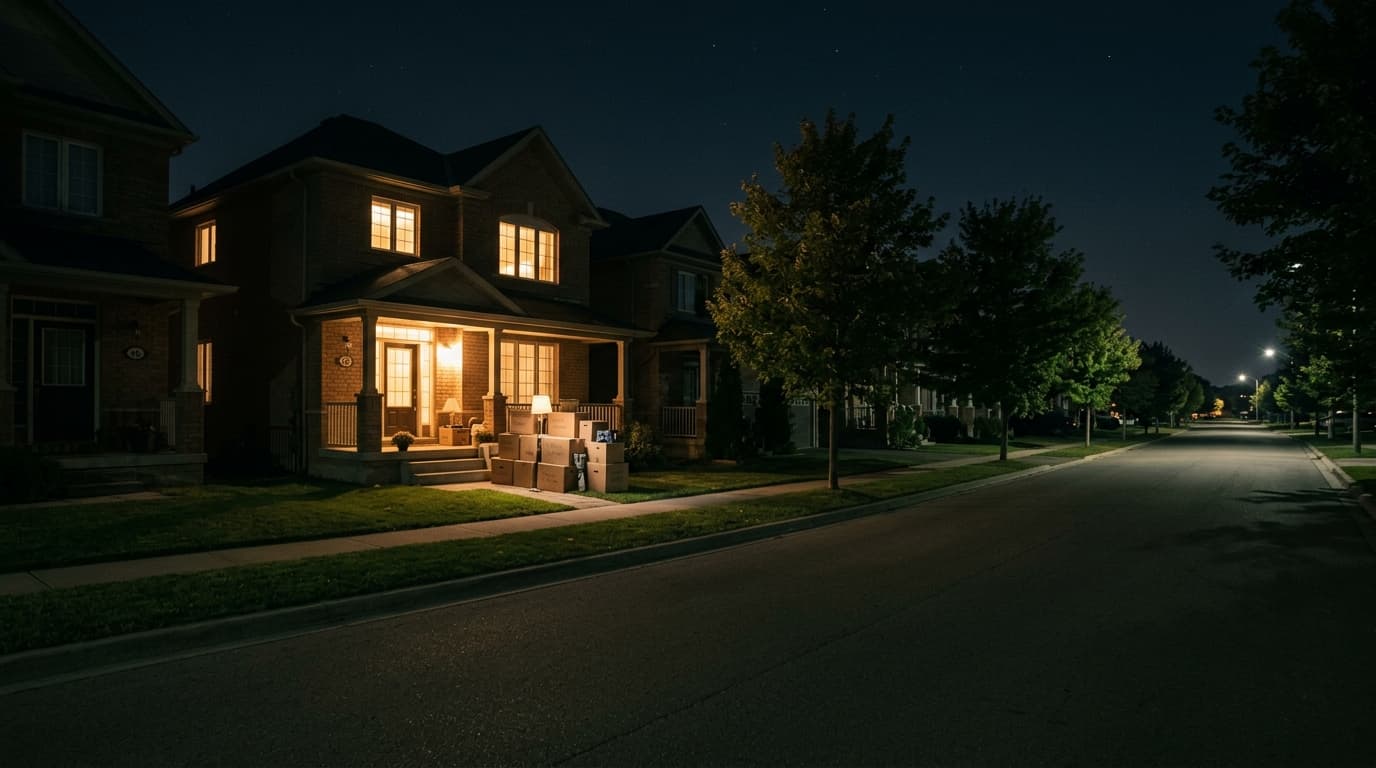
On the day of the switch, read and photograph:
- the day index on your electricity meter;
- the night index, if your meter is dual-rate;
- the gas meter index, if there is one;
- the EAN number, which must stay legible on the photo.
That reading closes the old contract and opens the new one. If the two suppliers record different values, you pay twice for the same kWh — and without a photo, it is your word against theirs.
On a digital meter the reading is transmitted automatically, but the photo remains a useful precaution: transmission errors do happen.
How much can you really save?
Between €150 and €650 a year for a reference household, depending on your starting point.
The calculation is easy to verify yourself, in four operations.
- Take your annual consumption from your last invoice (often close to 3,500 kWh of electricity and 17,000 kWh of gas for an average household).
- Multiply it by the per-kWh price of the offer you are considering.
- Add the fixed annual standing charge.
- Compare the total with the "energy" line on your current bill — excluding network costs and levies, which are identical whatever the supplier and often account for more than half the final amount.
The biggest gains go to households still on an old contract. Those who switched less than two years ago and already sit with a well-placed supplier will gain a few tens of euros: real, but not budget-changing.
Key takeaways
Switching is free, causes no interruption and is driven by the new supplier. Do not cancel anything yourself. Photograph your meter reading. And before you sign, take ten minutes to look at which energy supplier is genuinely best for your profile: that, and nothing else, is where the savings are decided.
Sources: Ores, Resa, Fluvius and Sibelga, distribution grid operators (role of the grid, EAN code, meter readings); suppliers' general terms and the 2023 reforms on cancelling fixed-price contracts — accessed 18 August 2026. Variable offers are re-indexed every month: always check the date of a price grid before comparing.
Changer de fournisseur comparator
Compare all changer de fournisseur side by side.
Compare now →
Frequently asked questions
Camille suit le marché belge de l'énergie depuis une dizaine d'années. Elle a d'abord travaillé côté gestion de contrats B2B, puis est passée à l'analyse indépendante : elle éplucha les grilles tarifaires de Mega, Bolt, Engie, Luminus, TotalEnergies, Eneco ou Ecopower, recoupe chaque prix avec le CREG Scan, la CWaPE, le VREG et Brugel, et refait les calculs de facture à la main quand un fournisseur communique un chiffre trop rond. Sa conviction : la plupart des ménages belges ne changent jamais de fournisseur et paient chaque année quelques centaines d'euros de trop — pas par paresse, mais parce que les offres sont volontairement illisibles. Ici, elle traduit les conditions tarifaires en euros par an, et dit clairement quand une « promo » n'en est pas une.