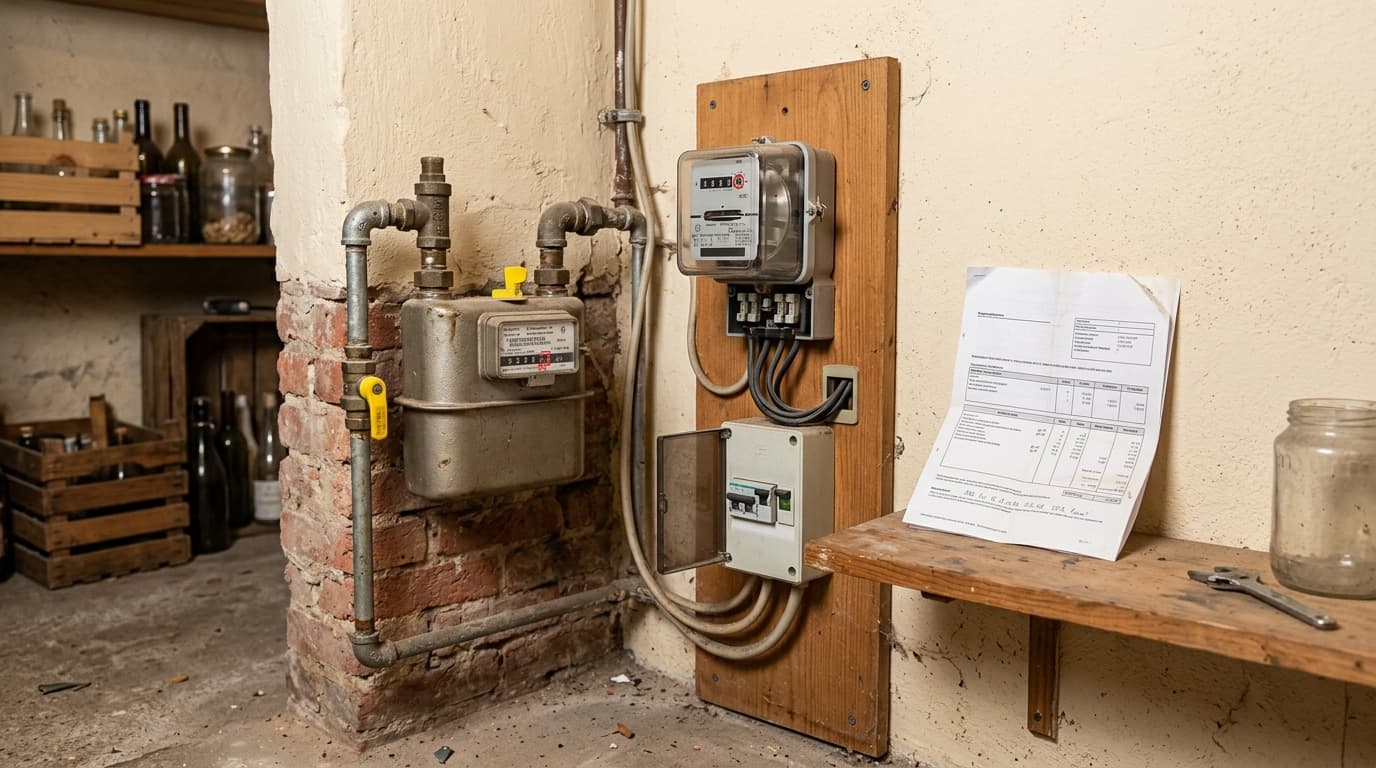
The EAN code of your meter is an 18-digit number starting with 54, printed on every energy bill. One for gas, one for electricity. It identifies your home's connection, not you, and it is the one piece of data without which no supplier can open, close or transfer a contract.
What is the EAN code of a meter?
A supply point identifier.
EAN stands for European Article Numbering, the coding system run by GS1, the same organisation that issues supermarket barcodes. In the energy sector, the format used is a variant called GSRN: Sibelga's technical glossary refers to "EAN-GSRN" to identify an access point to the grid. Each connected address gets one code per energy, assigned by the distribution network operator (DSO, called GRD in French: the company that runs the local grid and that you cannot choose) and recorded in the Belgian market's shared database, which suppliers consult every time a contract changes.
Keep one idea in mind: the code follows the home, never the person.
Where do you find the EAN code of your meter?
On the bill, first of all. Every supplier prints it on both monthly bills and annual settlement bills, usually in the "supply point" or "consumption address" block. It also appears in the supplier's customer area, on the DSO's quotes, and most often on a sticker on or next to the meter, as the Fluvius FAQ points out. The energy handover document signed when moving home lists it too.
With no bill to hand, each DSO has its own entry point.
| Region | DSO | Getting the code without a bill |
|---|---|---|
| Brussels | Sibelga | Online tool (address + meter number) or 02 549 41 00, weekdays 8 am to 5 pm |
| Wallonia | ORES | myORES customer area, or online form with the meter number |
| Wallonia (Liège area) | RESA | "Mon code EAN" page and MyRESA customer area |
| Wallonia (AIEG municipalities) | AIEG | Form to return to bt@aieg.be |
| Flanders | Fluvius | Contact form "EAN-code, meternummer of energieleverancier" |
Checked on the DSOs' websites on 30 September 2026. To find out which one serves your municipality, see our guide to distribution network operators.
Is the gas meter EAN code different from the electricity one?
Yes, always. Two energies, two supply points, two codes. This is a classic source of error when switching both energies to one supplier, and it is all the easier to make because the two codes look alike: in Brussels, Sibelga states that all codes, gas and electricity alike, start with 5414489. The first seven digits will therefore tell you nothing. Only the bill, which places each code under the right energy, or the sticker on each meter, settles it without ambiguity.
EAN code and meter number: what is the difference?
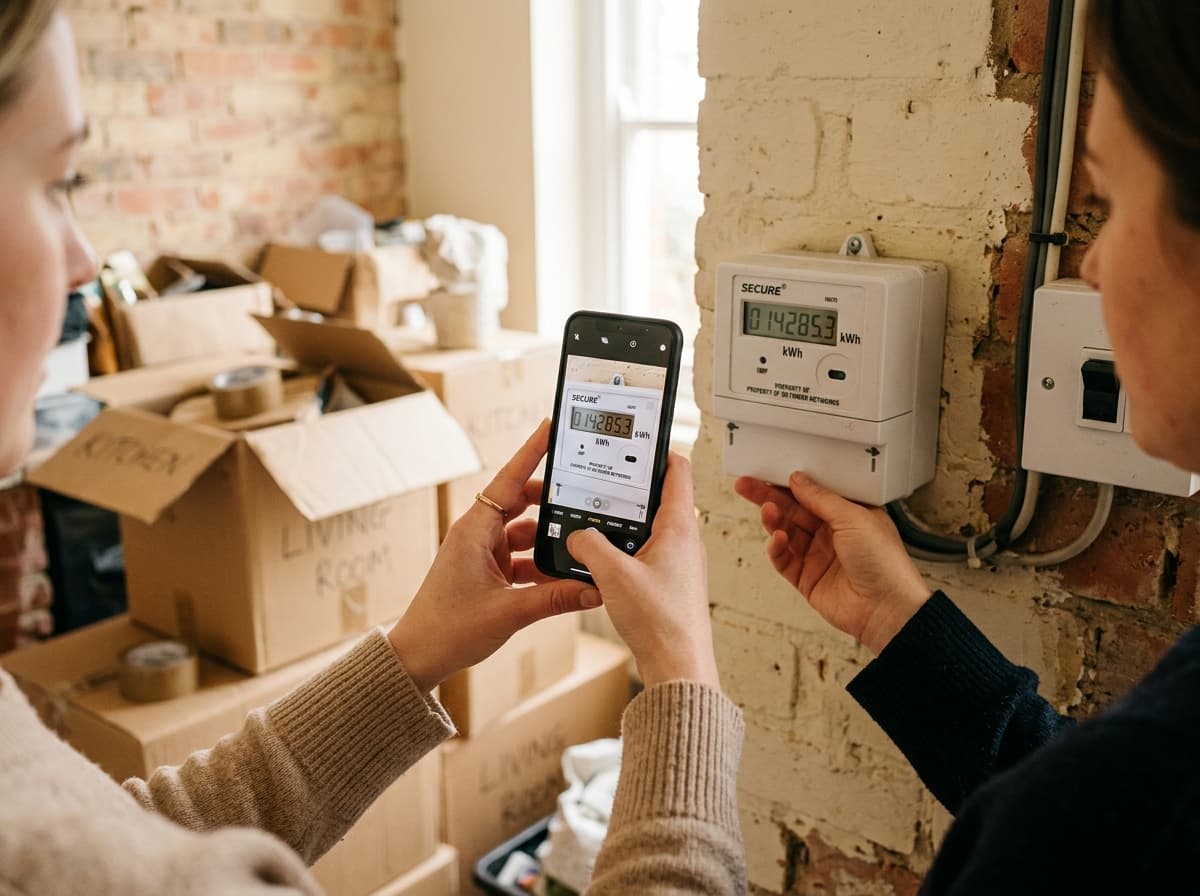
The meter number identifies the device, the EAN code identifies the connection. The first has 6 to 8 digits and is read on the meter's plate; the second has 18. When the DSO replaces your old electromechanical meter with a digital one, you get a new meter number but keep the same EAN code, and your contracts carry on without you doing anything. According to Sibelga, the code only changes if the installation is completely renewed. The customer number, for its part, belongs to the supplier and changes every time you switch.
How do you check that an EAN code has no typo?
With its last digit. The 18th digit of a GSRN code is not a serial number: it is a check digit, calculated from the other 17 using the standard GS1 algorithm, the very one that lets a supermarket till reject a badly scanned barcode. None of the supplier or DSO help pages consulted for this article mention it, even though it reliably catches a single mistyped digit and most swaps of two neighbouring digits, which are exactly the mistakes people make when typing 18 digits into a sign-up form. The method takes four steps.
- Take the first 17 digits. Add up those in odd positions (1st, 3rd, 5th… 17th) and multiply the total by 3.
- Add up the digits in even positions.
- Add the two results together.
- The check digit is whatever is needed to reach the next multiple of ten (0 if the sum is already a round number).
Example with a fictitious code, 541448900000123454. Odd positions: 5+1+4+9+0+0+1+3+5 = 28, giving 84. Even positions: 4+4+8+0+0+0+2+4 = 22. Total: 106. It takes 4 to reach 110. The 18th digit is indeed 4.
Now swap the final 4 and 5, as happens when typing too fast: the calculation gives 6, the code ends in 4, so it is wrong. Two minutes of arithmetic spare you what a public complaint on Test-Achats, the Belgian consumer association, described in November 2024: a wrongly registered code, an old contract never closed, and bills from two suppliers for the same home.
One limit, though: the calculation tells you neither whether the code exists nor which address it belongs to. It only guarantees that it is well formed, which already rules out most typing errors.
Six situations where the EAN code gets stuck, and the way out
Each case has its own exit.
| Situation | What to do |
|---|---|
| You move in without any bill | Ask the owner or previous occupant for the codes, otherwise the DSO with the address and meter number |
| The meter has just been replaced by a digital one | Nothing: the EAN code is unchanged, only the meter number changes |
| The new supplier rejects the code | Check the check digit, then make sure you did not give the gas code for electricity |
| You receive bills from two suppliers | Written complaint to the supplier, then the Energy Ombudsman if nothing happens |
| ORES tells you your data is blocked | Follow its procedure: new meter, new EAN code, consumption billed 3 to 6 months after installation |
| A salesperson asks for the code | Refuse until you have read and accepted the offer |
Blocking deserves a word of explanation. ORES links these malfunctions to the launch of Atrias, the federal market data platform, in November 2021, and commits to billing the period concerned at the lowest price on the market, never above your supplier's. Advance payments already made to that supplier are refunded to you.
Four mistakes come up again and again:
- copying the meter number instead of the EAN code, because it is more visible on the device;
- mixing up the gas and electricity codes when signing up for both energies;
- in an apartment building, reading the sticker of the neighbouring meter, fitted right next to yours;
- leaving out a digit, which the check calculation always catches.
Why does the EAN code matter when switching supplier?
Because it is the only key the market recognises. Your name, address and customer number are not enough: the supplier you choose registers your EAN code in the shared database, and the old contract closes automatically, without you having to cancel it. So have both codes in front of you before opening the energy supplier ranking: comparing takes ten minutes, signing up two more.
Sources. EAN-GSRN definition: Sibelga technical glossary. Brussels prefix 5414489, lookup tool and contact number: Sibelga. Confidentiality of the code, form, myORES and the Atrias-related blocking procedure: ORES. Location of the code on the bill and meter: Fluvius. AIEG form: aieg.be. Length of the meter number (6 to 8 digits): Callmepower. GSRN structure and check digit: GS1. Registration error case: Test-Achats public complaint of 21 November 2024. Pages checked on 30 September 2026. The worked example uses a fictitious code.
Changer de fournisseur comparator
Compare all changer de fournisseur side by side.
Compare now →
Frequently asked questions
Camille suit le marché belge de l'énergie depuis une dizaine d'années. Elle a d'abord travaillé côté gestion de contrats B2B, puis est passée à l'analyse indépendante : elle éplucha les grilles tarifaires de Mega, Bolt, Engie, Luminus, TotalEnergies, Eneco ou Ecopower, recoupe chaque prix avec le CREG Scan, la CWaPE, le VREG et Brugel, et refait les calculs de facture à la main quand un fournisseur communique un chiffre trop rond. Sa conviction : la plupart des ménages belges ne changent jamais de fournisseur et paient chaque année quelques centaines d'euros de trop — pas par paresse, mais parce que les offres sont volontairement illisibles. Ici, elle traduit les conditions tarifaires en euros par an, et dit clairement quand une « promo » n'en est pas une.