
Cancelling your gas or electricity contract in Belgium is free: no termination penalty can be charged, provided you respect a one-month notice period. It's a clear rule, written into law since 2012, and yet one of the least understood on the energy market. Many households stay for years on a disadvantageous contract believing that leaving is expensive. Here is exactly what the law says, the rare exceptions that exist, and what the reform in preparation will change.
Does cancelling an energy contract cost anything?
No. In Belgium, ending a gas or electricity supply contract is free, with no termination penalty, subject to a maximum one-month notice period.
This free cancellation is not a commercial gesture: it's a legal obligation. A supplier cannot charge you a "departure fee" or a penalty on the grounds that you're leaving, whatever time was left to run on your contract. The rule applies to both open-ended and fixed-term contracts, and covers households as well as, to a large extent, the self-employed and small businesses.
The table below sums up what can, and cannot, be charged to you.
| Situation | Termination fee | Notice period |
|---|---|---|
| Open-ended energy contract | €0 | 1 month maximum |
| Fixed-term energy contract (fixed price) | €0 | 1 month maximum |
| Closing a contract because you move | €0 | n.c. |
| Add-on services sold with the energy | fees possible, must be stated in the contract | n.c. |
| After the 2026-2027 reform (announced) | €0 on energy, add-on services pro rata | around 3 weeks |
Since when has cancellation been free?
Since September 2012, when the federal Electricity and Gas Acts were amended to strengthen consumer freedom.
Before that date, leaving a fixed-term contract before its end could trigger a penalty. The 2012 reform removed it: since then, a customer who cancels their gas or electricity contract early no longer has to pay a penalty for that reason alone. The federal regulator, the CREG, oversees compliance with this framework, defined at national level by the Electricity Act and the Gas Act.
This change follows the logic of the market liberalisation launched in 2007: for competition to genuinely benefit consumers, they had to be able to change supplier without being held back by fees. Free cancellation is the mechanism that makes that freedom real.
What notice period must I respect?
One month maximum, whatever the type of contract, and without having to justify your decision.
In practice, you can cancel at any time: the one-month notice runs from your notification. But in the vast majority of cases, you don't even manage that notice yourself. When you sign up with a new supplier, it notifies the change to the grid operator and cancels your old contract within the deadline. You send no registered letter and calculate no date.
That's also why you should not cancel yourself in parallel. The full step-by-step procedure is detailed in our article on how to switch energy supplier in Belgium.
Are there cases where fees still apply?
Yes — but those fees never relate to the energy supply itself. They concern the add-on services sold alongside it.
This is the most important nuance to grasp. The legal free cancellation covers gas and electricity. However, if your offer bundles other services, the early termination of those services can be charged. They are accessory contracts, with their own terms. The most frequent cases:
- a connected thermostat;
- a boiler maintenance contract;
- equipment rental;
- a solar installation financed by the supplier.
Another particular situation: moving house. Closing a contract because you're leaving a home remains free, but it isn't an ordinary cancellation. It requires an agreed meter reading at the old address and the opening of a new contract at the new one — two operations distinct from a simple supplier switch, which we set out in our guide to moving home and energy in Belgium.
Can fixed-price contracts be cancelled without fees?
Yes. Since the reforms during and after the energy crisis, households' fixed-price contracts are also cancellable with one month's notice and no termination penalty.
This is a point many consumers still overlook, because it blocked many switches during the years of high volatility. Today, being on a fixed contract does not trap you: you can leave freely.
There remains a matter of common sense, distinct from the law. Cancellable does not mean always advisable. If you signed a very low fixed price during a period of depressed markets, leaving it for a variable offer may cost you more — not in termination fees, but in energy price. To weigh up the formulas, our guide on fixed, variable or dynamic contracts compares the three logics.
The law gives you the right to leave for free. It's up to you to check that leaving is also the right economic decision.
What will the 2026-2027 reform change?
It aims to go even further in protecting the consumer: shorter notice, pro-rata fees, and a crackdown on hidden charges.
A federal reform of energy contracts is expected for 2026-2027. Among the announced measures:
- the ability to cancel at any time with a shorter notice period, around three weeks instead of a month;
- an obligation to calculate certain fees according to the actual number of days spent with the supplier, which removes "hidden termination fees";
- stricter regulation of add-on service fees, with a degressive table based on the remaining term.
How do I cancel without risking double billing?
By letting the new supplier drive the switch, and never cancelling yourself in parallel.
The scenario to avoid is simple: you sign up with a new supplier and, out of excess zeal, also send a cancellation to the old one. The possible result is a gap between the two contracts, during which you fall onto the default supplier at a higher rate, or conversely a period billed twice. The right reflex comes down to three actions.
- Sign up with the new supplier and let it notify the change to the grid operator.
- Touch nothing else: send no cancellation of your own.
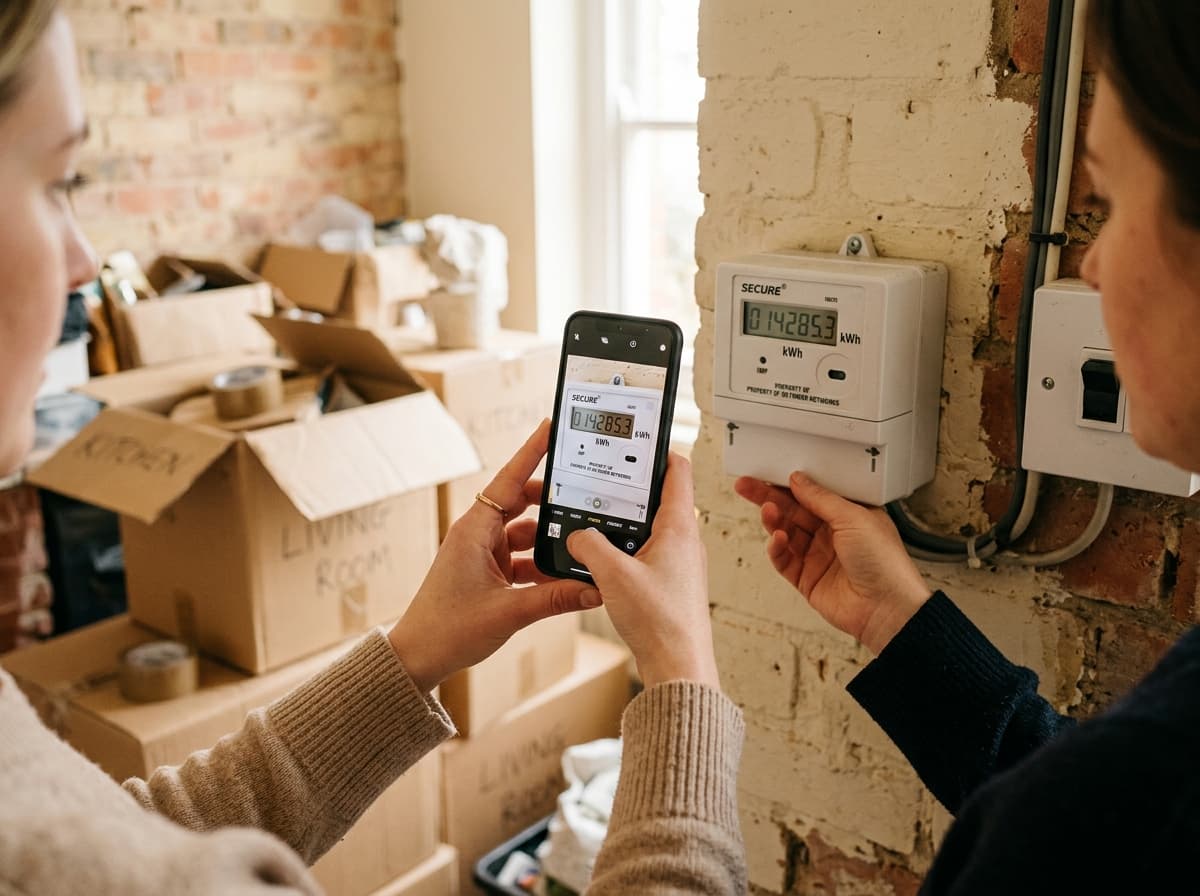
- Photograph your meter reading on switch day — it's your only proof in case of a disagreement over kWh.

Key takeaways
Free cancellation is a right, not a favour: no supplier can charge you a penalty for leaving a gas or electricity contract by the book, with one month's notice. Just check the add-on services clause before signing a bundled offer, don't cancel yourself when you switch supplier, and bear in mind that variable rates change every month. Since leaving costs nothing, the only question that matters is the destination: start by looking at which energy supplier is best placed for your profile.
Sources: CREG, the federal regulator (Electricity Act and Gas Act, September 2012 amendments); federal reform of energy contracts announced for 2026-2027; suppliers' general terms for add-on services — accessed 18 August 2026. Variable offers are re-indexed every month: always check the date of a price grid before comparing.
Changer de fournisseur comparator
Compare all changer de fournisseur side by side.
Compare now →
Frequently asked questions
Camille suit le marché belge de l'énergie depuis une dizaine d'années. Elle a d'abord travaillé côté gestion de contrats B2B, puis est passée à l'analyse indépendante : elle éplucha les grilles tarifaires de Mega, Bolt, Engie, Luminus, TotalEnergies, Eneco ou Ecopower, recoupe chaque prix avec le CREG Scan, la CWaPE, le VREG et Brugel, et refait les calculs de facture à la main quand un fournisseur communique un chiffre trop rond. Sa conviction : la plupart des ménages belges ne changent jamais de fournisseur et paient chaque année quelques centaines d'euros de trop — pas par paresse, mais parce que les offres sont volontairement illisibles. Ici, elle traduit les conditions tarifaires en euros par an, et dit clairement quand une « promo » n'en est pas une.