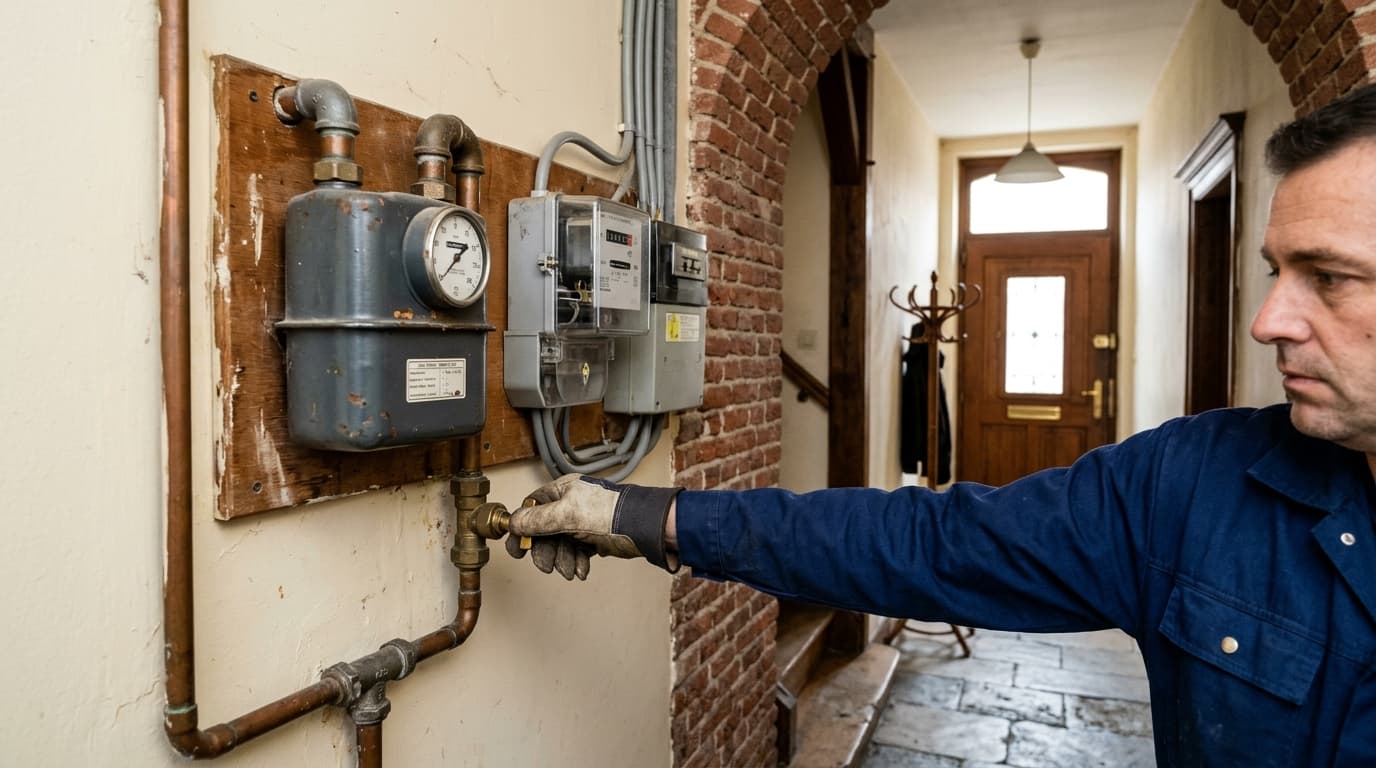
Reopening a closed meter is the one part of moving in that really costs money. In 2026, a technician visit costs between €106 and €198 per meter depending on the region, VAT included, and almost twice that when both gas and electricity have been closed. These amounts are not set by your supplier: they come from the regulated rate sheets of each distribution network operator (in Belgian jargon, the GRD, the company that owns the cables, pipes and meters in your area), which we read one by one.
Comparison sites quote figures that contradict each other. One guide talks about "a few tens of euros", another about "several hundred". Both are half right, and the gap comes down to three variables nobody separates: the region, the type of meter and the number of energies to reopen.
The meter is closed: who opens it, and at whose request?
The network operator, never the supplier. Engie, Luminus, TotalEnergies, Mega or Eneco sell the energy, but none of them holds the key to the meter. They send an opening request to the distribution network operator for your municipality, which sends its technician and bills the job to the supplier, who then bills it to you.
Order matters. No signed contract means no opening request, and the technician does not come. So you first choose a supplier, give it the EAN code of each meter (an 18-digit number starting with 54 that identifies the supply point, see our article on the EAN code), then book an appointment with the network operator. Comparison-site guides advise calling the operator within 48 hours of the contract being confirmed.
You cannot choose your network operator; it depends on your address. Sibelga in Brussels, Fluvius in Flanders, ORES or RESA for most of Wallonia, plus three small operators (AIEG, AIESH, REW) that handle electricity only in their municipalities. Our guide to the distribution network operator explains who covers what.
€164 excluding VAT in Brussels, €88 in Flanders: the 2026 rate sheets
We read the non-periodic rate sheets approved by the three regional regulators: Brugel in Brussels, CWaPE in Wallonia and VREG in Flanders. These are the only enforceable amounts: the operator cannot charge anything else for the same service, and your supplier only passes them on. The sheets are published excluding VAT; we added 21% VAT, the rate used in the Fluvius sheet and in the invoice examined by Brugel's disputes service.
| Service (2026, per EAN code) | Sibelga (Brussels) | ORES (Wallonia) | RESA (Wallonia) | Fluvius (Flanders) |
|---|---|---|---|---|
| On-site opening, technician | €164 excl. VAT, i.e. €198.44 incl. VAT | €128.33 excl. VAT, i.e. €155.28 incl. VAT | €128.33 excl. VAT, i.e. €155.28 incl. VAT | €87.82 excl. VAT, i.e. €106.26 incl. VAT |
| Remote opening (digital meter, electricity) | €16 excl. VAT, i.e. €19.36 incl. VAT | free | free | free |
| On-site closure | free | €128.33 excl. VAT | €128.33 excl. VAT | €87.82 excl. VAT |
| Wasted technician trip | €162 excl. VAT, i.e. €196.02 incl. VAT | €128.33 excl. VAT | €128.33 excl. VAT | included in the small intervention |
| Energies covered by the line | gas and electricity | electricity | electricity | electricity |
Sources: Sibelga 2025-2029 rate sheet published by Brugel, ORES 2026 electricity annex, RESA 2026 electricity annex filed with CWaPE, VREG 2026 low-voltage details. Checked on 23 October 2026.
Three findings stand out. Brussels is the most expensive region to reopen a meter, but the only one where closing costs nothing. Flanders is the cheapest, because Fluvius files opening and closing under a single-price "small intervention without materials", and bills a second intervention at the same address only €58.30 excluding VAT. Finally, the digital meter changes everything for electricity: in Wallonia and Flanders, remote opening is free.
Gas is the blind spot. Sibelga's line applies to gas as well as electricity, which gives a clean figure: reopening both meters of a Brussels home costs €396.88 including VAT in 2026. In Wallonia and Flanders, the amounts we publish come from the electricity sheets; gas rates sit in separate annexes we could not access, so we have not extrapolated them. Ask the operator for the gas amount when you book.
The price rises every year.
In Brussels, the same opening cost €143 excluding VAT in 2025 and will cost €205 in 2029 under the sheet already approved: a 14.7% rise in 2026 alone, and 43% over five years, while closure stays free throughout the period.
Why a meter ends up closed
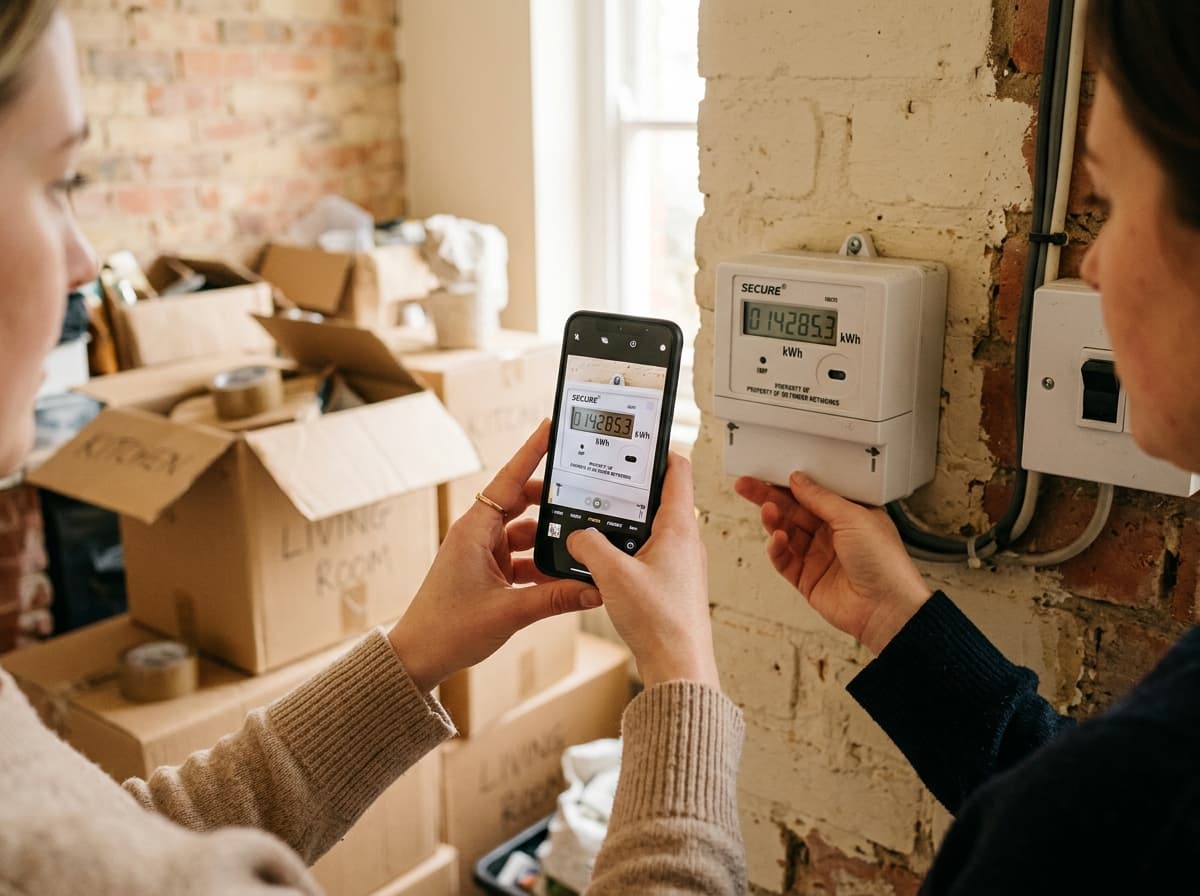
Almost always because one contract ended without another taking over. The previous occupant cancelled, nobody took over the supply point, and the outgoing supplier eventually asked the operator to cut supply. In Brussels, this procedure has a name in market jargon, MOZA, and decisions by Brugel's disputes service show how it unfolds: in a 2016 case, the supplier starts the procedure on 13 October, Sibelga tries four times to reach the meters between 18 October and 7 December, closes them on 13 December, and the new occupant gets them reopened on 28 December, fifteen days after the cut.
In Flanders, the mechanism runs through a form. When Fluvius sees consumption with no known supplier, it asks the occupant to fill in a regularisation form: you name your former supplier or the previous occupant's, and remain free to switch at no cost within three months. Refusing to answer triggers the closure procedure. Occupants can also ask for the meters to be sealed themselves, at their own expense.
The Brussels technical regulation adds a useful detail. When the operator sees consumption on a meter closed for less than 13 months, it must write to the occupant and the owner asking them to regularise. Beyond that, the meter is treated as a dead point.
That leaves the case that owes nothing to chance: the landlord who deliberately has an empty home closed, for works or between two tenancies. We come back to it below, with figures.
Does gas need a certificate to reopen?
Not after a simple move. This is the question that worries people most, and the answer from Cerga, the quality label for gas installers, is clear. The operator requires a certificate of compliance when a meter is opened for the first time on a new installation, when it is reopened on a renovated or extended installation, when the meter is upgraded, or when a modified installation has its meter moved.
It does not require one in the other cases, and the list is reassuring. No certificate if the operator had not closed the meter itself, if you only replaced a gas appliance, after a move without changes to the installation, or when reopening after a closure for non-payment. Replacement of the meter or pipe by the operator does not need one either.
The trap is therefore the empty home you renovated. A new gas kitchen, a moved pipe, a boiler installed elsewhere: on the day the technician comes to reopen, he will leave without opening if there is no certificate. Since 1 January 2024, it only exists in digital form, created on the Elgacert platform, and old paper certificates are no longer accepted. A Cerga-certified installer issues it directly; a non-certified installer must add a positive report from an approved inspection body, which means another appointment and another bill.
In Brussels, Sibelga's regulation goes further after a safety cut-off. The operator only reopens once it has received a certificate of compliance issued by a BELAC-accredited body, and after checking tightness itself, with a combustion test if an appliance was involved.
A broken seal, a €173 bill
The story is told in a decision by Brugel's disputes service, R2025-158. A Brussels owner signs an electricity contract on 15 February 2025. The meter is already running, showing 47,196 on the index. Sibelga reactivates the supply point in its systems on 19 February and, a few weeks later, the supplier bills him €173.03 including VAT for a meter opening.
He disputes it. He never saw a technician and the power never went off. Sibelga, for its part, had found during a reading on 6 December 2024 that the seal was broken and the meter was consuming without a contract.
The disputes service sided with the operator. The technical regulation reserves seal-breaking to the operator or someone with its written consent, and an administrative reactivation does not replace a physical opening by a technician: the complaint was declared admissible but unfounded, and the €143 excluding VAT of the rate then in force remained due. The new owner thus paid for an act committed by someone else, before he arrived.
The lesson applies to every buyer. At the inventory or the deed signing, look at the meter seal and note its condition on the energy takeover document. In Wallonia, ORES charges €64.65 excluding VAT to refit a seal after a break, RESA €136.77, on top of the opening.
Close or keep an empty home open?
It depends on the region and the meter. Most suppliers offer an "empty home" contract in the owner's name, which keeps the meter open with no annual fixed fee but a higher price per kWh. In May 2026, Selectra recorded advance payments of €10 per month per energy at Eneco and Luminus, and €15 at TotalEnergies. The final statement follows real consumption, often very low in an unoccupied home.
For an electricity meter, we calculated the number of vacant months after which closing and then reopening becomes cheaper than keeping an empty-home contract at €10 a month. Assumption: you request the closure, then the reopening, on site yourself.
| Region and meter | Close then reopen (incl. VAT) | Break-even point for closing |
|---|---|---|
| Brussels, conventional meter | €0 + €198.44 = €198.44 | about 20 months |
| Wallonia (ORES or RESA), conventional meter | €155.28 + €155.28 = €310.56 | about 31 months |
| Flanders, conventional meter | €106.26 + €106.26 = €212.52 | about 21 months |
| Wallonia or Flanders, digital meter | €0 remotely | immediate |
| Brussels, digital meter | €0 + €19.36 = €19.36 | about 2 months |
Calculation made on 23 October 2026 using the 2026 rate sheets above and the €10 monthly advance recorded by Selectra.
The result runs against intuition. For a vacancy of a few months between tenants, keeping the meter open wins almost everywhere, as long as the meter is conventional. With a digital meter it is the reverse: closing remotely costs nothing, or almost, and the empty-home contract becomes unnecessary. Gas adds a safety variable, since renovation during closure makes the certificate mandatory at reopening.
Urgency and wasted trips, the two lines that double the bill
The opening rate assumes a normal appointment, booked a few working days ahead, and a technician who finds the meter accessible. If you need to move in fast, Sibelga offers urgent reopening on the next working day at €257 excluding VAT in 2026, i.e. €310.97 including VAT, or on the same day for a request received after 3 pm at €513 excluding VAT, i.e. €620.73 including VAT. That is more than three times the price of an ordinary appointment. A wasted trip is billed €162 excluding VAT by Sibelga and €128.33 by ORES and RESA when the technician cannot reach the meter. Work outside service hours carries surcharges at the Walloon operators, from 50% in the evening to 100% at weekends and on public holidays at ORES.
Six checks before the technician's visit
- A signed contract with a supplier for each energy to reopen, with a start date close to the appointment.
- The EAN code of each meter, taken from an old bill, from the meter itself or from the network operator.
- The condition of the seals, photographed and noted on the energy takeover document together with the meter readings.
- Free access to the meter on the day: cellar unlocked, shared room open, building manager informed in an apartment block.
- For gas, the list of works carried out during closure, and the digital certificate if the installation was modified.
- The meter type: a digital meter can be opened remotely for electricity, with no visit.
Open at the right price, then choose the right contract
The opening is paid once. The contract is paid every month. Since you must sign one anyway to trigger the request, compare the total annual cost, gas and electricity included, in our energy supplier ranking, and read our moving home guide so that no meter closes between two occupants.
Sources. Brugel, Sibelga non-periodic rates 2025-2029, "Miscellaneous" category (opening, closure, urgency, trips). ORES, 2026 electricity connection and service rates. RESA, 2026 electricity non-periodic rate annex filed with CWaPE. VREG, details of Fluvius's 2026 low-voltage rates. Brugel disputes service, decisions R2025-158 and R2017-060. Cerga, "Attestation de conformité", accessed 23 October 2026. Vlaanderen.be, "Fluvius kent uw leverancier niet?", accessed 23 October 2026. Sibelga regulation on safety cut-offs of gas installations. Selectra, empty-home contract, updated 21 May 2026, and moving-home energy steps, 23 July 2026. 2026 amounts checked on 23 October 2026; non-periodic rates are revised every year, and energy prices on variable contracts change every month.
Camille
Changer de fournisseur comparator
Compare all changer de fournisseur side by side.
Compare now →
Frequently asked questions
Camille suit le marché belge de l'énergie depuis une dizaine d'années. Elle a d'abord travaillé côté gestion de contrats B2B, puis est passée à l'analyse indépendante : elle éplucha les grilles tarifaires de Mega, Bolt, Engie, Luminus, TotalEnergies, Eneco ou Ecopower, recoupe chaque prix avec le CREG Scan, la CWaPE, le VREG et Brugel, et refait les calculs de facture à la main quand un fournisseur communique un chiffre trop rond. Sa conviction : la plupart des ménages belges ne changent jamais de fournisseur et paient chaque année quelques centaines d'euros de trop — pas par paresse, mais parce que les offres sont volontairement illisibles. Ici, elle traduit les conditions tarifaires en euros par an, et dit clairement quand une « promo » n'en est pas une.