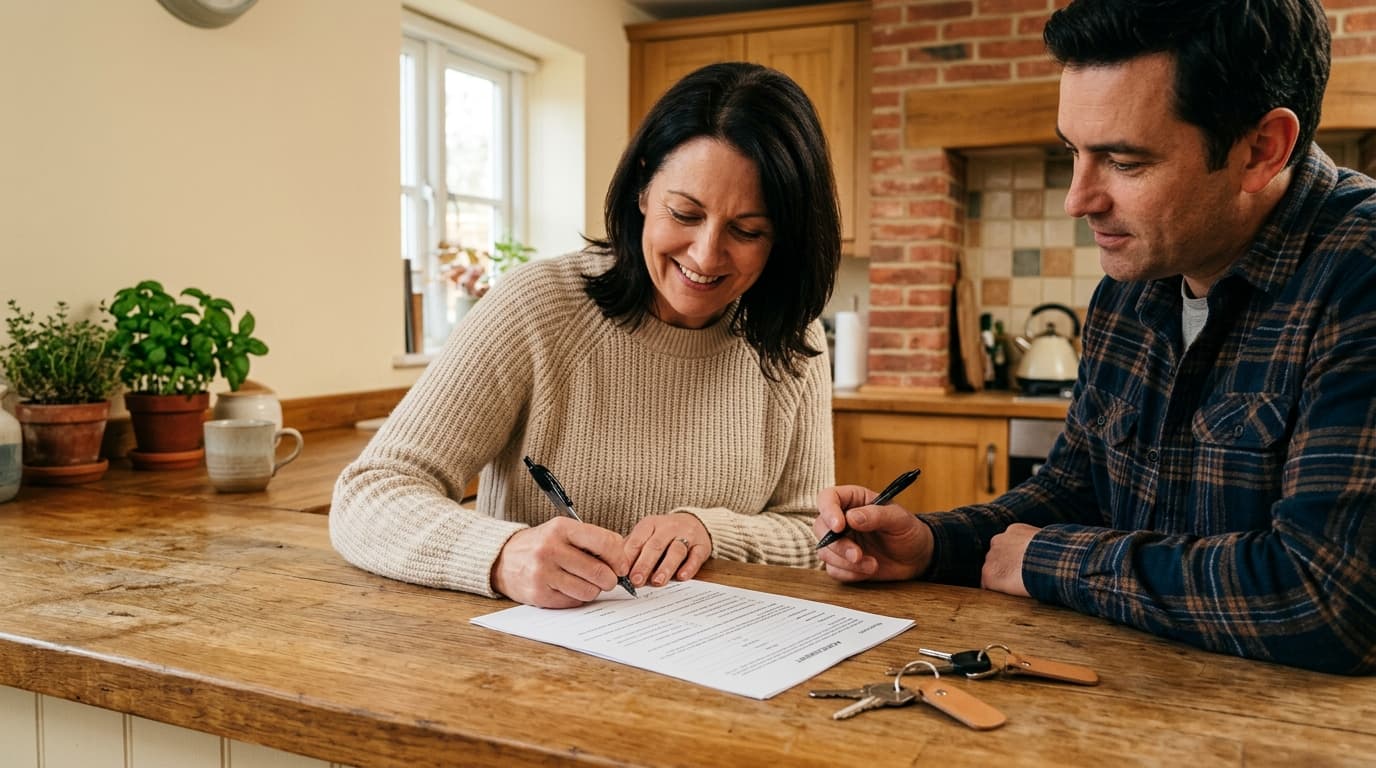
The energy takeover document is the free form on which the occupant leaving a home and the one moving in write down the electricity and gas meter readings together, then sign. It is filled in on the day the keys are handed over, in two copies, and each party passes their data to their own supplier within 7 days.
What is the energy takeover document?
A record. Nothing more.
It was launched on 17 June 2013 by Belgium's three regional energy regulators, CWaPE (Wallonia), BRUGEL (Brussels) and VREG (Flanders), to replace the in-house forms each supplier used to impose. Their joint press release sets out the two rules that still matter: the document is signed jointly by the person giving up the supply point and the person taking it over, and each keeps a copy that has legal value in a dispute.
So it replaces no contract. The newcomer has to sign one with a supplier of their choice, which makes this the right moment to open the energy supplier ranking instead of inheriting the previous occupant's supplier by default.
Where do I find the takeover form as a PDF?
Anywhere energy is sold or distributed: on the website of your supplier, of your distribution grid operator (the GRD, the company that owns the local cables and pipes and that you cannot choose), or of your region's regulator. The template is the same, and every supplier must accept it wherever the PDF came from. Only the name changes: document de reprise des énergies in French, energieovernamedocument in Dutch, and "document de transfert d'énergie" in the French brochure from Fluvius, the Flemish grid operator.
Print it twice. The Sibelga FAQ does the sum many people forget: a household that moves signs four forms in total, two for the address it leaves and two for the address it takes over.
How do I fill in the takeover document, gas included?
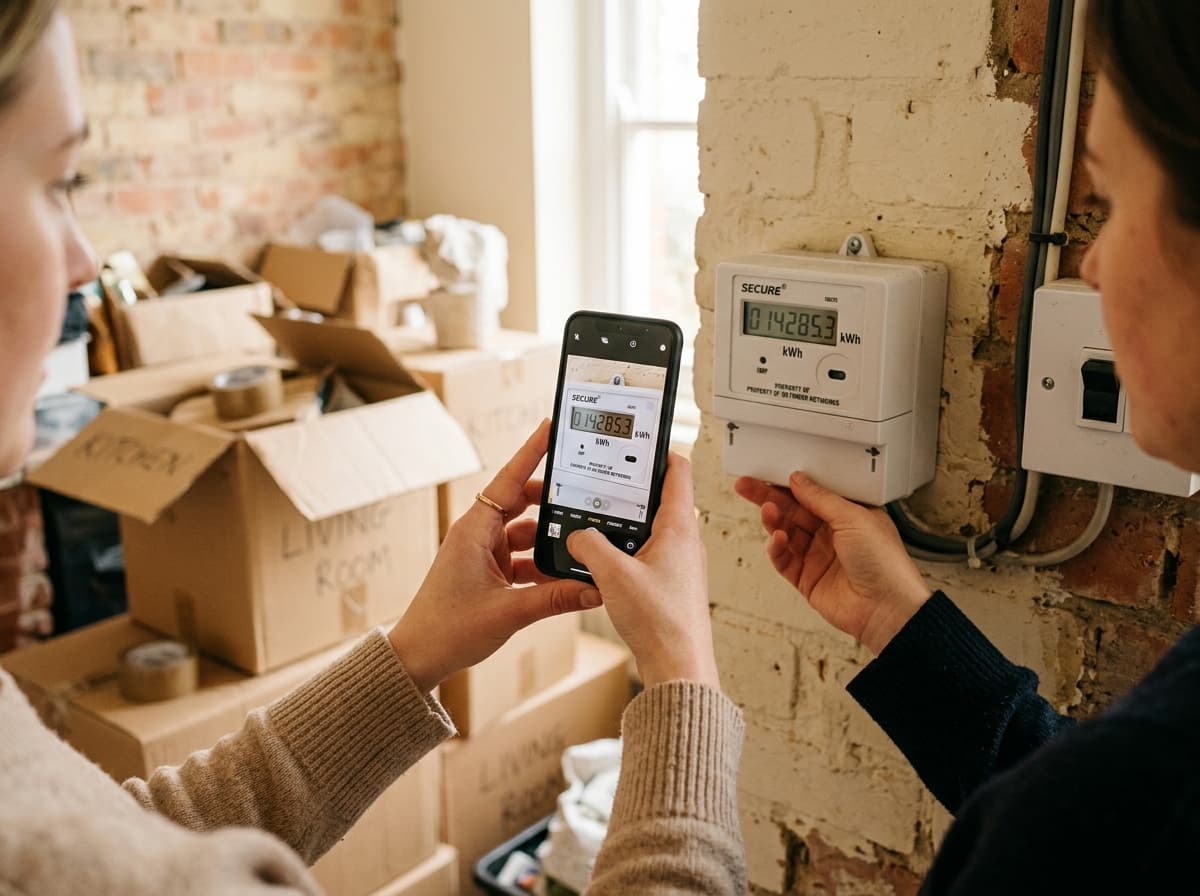
Together, in front of the meters, pen in hand. The form fits on one page and asks for:
- the date the keys are handed over, which becomes the switch date for both contracts;
- the address of the home;
- for electricity, the EAN code (the 18-digit number identifying the supply point), the meter number and the reading, or both day and night readings on a dual-rate meter;
- for gas, the EAN code, the meter number and the reading in m³;
- the identity, contact details and supplier of the person leaving;
- the same for the person arriving, with their status: tenant, owner-occupier, or owner of an empty property;
- both signatures.
The gas box is where most mistakes happen. The meter shows m³, often with three decimals in red or in a frame, and you copy only the digits before the comma. The two EAN codes look alike, and swapping them blocks the new contract: our guide to the EAN code explains how to tell them apart and check the last digit.
What does a wrong reading cost?
More on gas than on electricity, which is the opposite of what you would guess.
A kWh of gas costs less than a kWh of electricity, but a gas meter does not count kWh. Each m³ holds roughly ten of them (the detail is in our article on converting m³ to kWh), so a single misread digit in the hundreds column moves more than a thousand kWh from one occupant to the other in one go, where the same slip on the electricity meter moves only a hundred.
| Mistake on the form | Energy shifted | Amount at stake |
|---|---|---|
| 100 kWh of electricity | 100 kWh | €11 to €26 |
| 100 m³ of gas | about 1,100 kWh | €83 to €117 |
| 1,000 m³ of gas (one digit off by a column) | about 11,000 kWh | €830 to €1,170 |
Calculated at 11 kWh per m³ and the per-kWh prices recorded by Callmepower on 5 October 2026, from the cheapest offer to the most expensive: €0.1060 to €0.2624 for electricity, €0.0756 to €0.1065 for gas. Variable tariffs move every month; the orders of magnitude hold.
The money is not lost for everyone. It moves from one bill to the other, and whoever signed without looking has little left to contest it with.
Who gets the document, and by when?
Your supplier. Not the grid operator, which only steps in when a meter has been shut off.
The deadline is 7 days at the latest after the move, at Sibelga and at Fluvius alike. Most suppliers do not even want the paper itself: ENGIE, for example, asks you to enter the data in your customer area or give it over the phone. The signed form stays with you, as evidence.
If you keep the same supplier, Sibelga states that the contract continues on the same terms at the new address. You are not obliged to.
What if the other party refuses to sign or cannot be found?
It happens often: a tenant gone without a forwarding address, a landlord in dispute over the inventory, a seller in a hurry.
| Situation | What to do |
|---|---|
| The other party refuses to sign | Fill it in alone, photograph the meters with proof of the date, send to your supplier explaining the refusal |
| The previous occupant cannot be found | Same steps, asking the landlord to countersign if present |
| The tenant leaves with no successor | The landlord signs as the party taking over and takes a contract in their own name |
| The property stays empty | The owner keeps a contract, even for near-zero consumption |
| The meter is shut off | Call your supplier, who refers you to the grid operator for reopening |
| Separation or death | Fill in a document in the name of the person keeping or taking over the home |
The dated photo is not a detail. Fluvius suggests putting that day's newspaper in the frame. And photograph the right meter: in a decision of BRUGEL's dispute service, a Brussels tenant whose landlord refused to sign was billed €1,293.06 for months when she no longer lived in the flat, after photos were sent showing the third-floor meter instead of the ground-floor one. She won cancellation of the bills dated after her departure, but only at the end of a procedure.
Does the form differ by region?
The template, no. The side issues, yes.
In Wallonia and Flanders, a budget meter or prepayment meter does not follow its occupant: according to Sibelga, the card from the old home does not work in the new home's meter, and the supplier must be told. Our article on the budget meter covers what comes next. In Brussels, a power limiter fitted under the previous occupant must be removed no later than 15 days after the request, and homes with an A+/A- meter, meaning those with solar panels, use a specific form available from the regulator. In Flanders, only the name differs.
For the rest of the move, from deadlines to choosing a contract, see our guide to moving home and energy.
Sources. Launch of the common document and legal value: CWaPE, BRUGEL and VREG press release of 17 June 2013. Four forms, 7-day deadline, contract continuity, inactive meter, landlords, budget meter card, power limiter, A+/A- meter: Sibelga FAQ on the energy takeover document. Form fields, 7-day deadline and dated photo in case of refusal: Fluvius brochure, version 07-2025. Passing on data at ENGIE: Callmepower, page updated 20 January 2026. Brussels dispute: decision R2023-104 of BRUGEL's dispute service. Per-kWh prices: Callmepower, 5 October 2026. Pages consulted on 6 October 2026. The amounts in the table are the author's own calculations, excluding proportional grid fees and taxes not included in the recorded prices.
Changer de fournisseur comparator
Compare all changer de fournisseur side by side.
Compare now →
Frequently asked questions
Camille suit le marché belge de l'énergie depuis une dizaine d'années. Elle a d'abord travaillé côté gestion de contrats B2B, puis est passée à l'analyse indépendante : elle éplucha les grilles tarifaires de Mega, Bolt, Engie, Luminus, TotalEnergies, Eneco ou Ecopower, recoupe chaque prix avec le CREG Scan, la CWaPE, le VREG et Brugel, et refait les calculs de facture à la main quand un fournisseur communique un chiffre trop rond. Sa conviction : la plupart des ménages belges ne changent jamais de fournisseur et paient chaque année quelques centaines d'euros de trop — pas par paresse, mais parce que les offres sont volontairement illisibles. Ici, elle traduit les conditions tarifaires en euros par an, et dit clairement quand une « promo » n'en est pas une.